
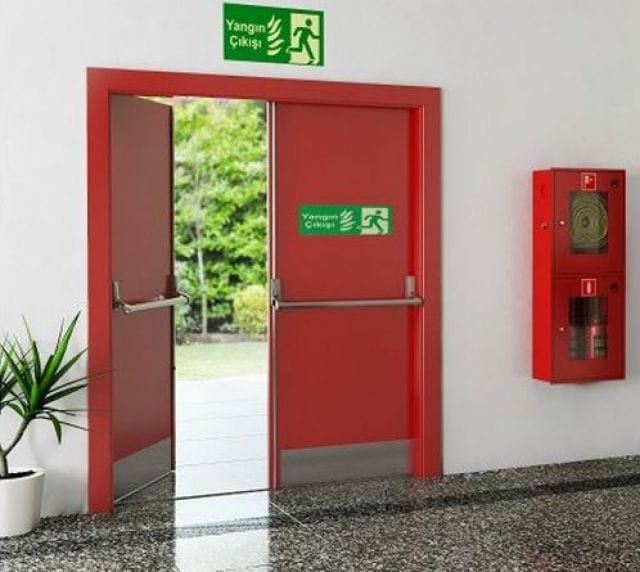
In Denizli, a city of towels and home textiles, copper wire and travertine, the fire load varies drastically from facility to facility. The team departing from Ankara, at this final stop of the Aegean tour, inspects the mysterious chimney of a paint shop in the morning, the control panel room of a cable factory in the afternoon, and the pump room of a marble facility the next day; the list is rewritten at every door.
Production distributed across three Organized Industrial Zones in Denizli recognizes no single maintenance schedule
Denizli industry operates along three main branches. The first is home textiles: integrated facilities producing towels, bathrobes, and bed linens establish long production lines from spinning mills through weaving halls, dyehouses, to garment finishing. The second is copper: copper wire as raw material for electrical cables, along with enameled bobbin wire and cable production, the work of large-scale facilities in the city. The third is natural stone: travertine and marble blocks from quarries are processed in cutting plants. "Denizli OSB, Leather Specialization OSB, and Mixed OSB are the weight centers of production along the Honaz corridor; the newly established Machinery Specialization OSB is opening areas on this line."
From a fire engineering perspective, the burden of these three branches is not comparable. In textiles, combustible inventory is everywhere: cotton bales, thread bobbins, fabric rolls, cardboard packaging. In copper wire, the load is in machinery: emulsion from wire-drawing lines, enameling furnaces, PVC extrusion lines, and dense electrical panels. In marble, the load appears low; yet the hydraulic oil unit, conveyor belt, and transformer room are the single weak, unprotected point in many natural stone facilities. Three sectors, three separate maintenance schedules.
Dyehouse, spinning mill, panel room: the priority items on the maintenance list
In the same facility in Denizli, several of these risks coexist; dividing the maintenance of the stenter, sprinklers, and panels among different firms also divides responsibility when failure occurs. We do not divide the system: from the detector monitoring the stenter exhaust stack to the pump room of the marble plant, from the fabric warehouse sprinklers to the gas suppression in the panel room of the wire-drawing line—everything installed in the facility is consolidated in a single contract; the maintenance of cameras (CCTV) monitoring weaving halls is likewise filed in the same dossier at the requesting facility.
- Fire detection: Fiber dust in the spinning mill and weaving hall leads the optical detector first to false alarms, then to blindness. Cleaning frequency and type selection (heat, light) is determined by dust level measurement; see details in detection maintenance page.
- Sprinklers: primary protection for cotton and fabric warehouses; the design becomes outdated as stock height changes. See , metros and and storage-warehouse solutionsA zone monitoring module connects an entire conventional detector line to the addressable loop. Critical areas are renewed with addressable devices while secondary zones continue to operate with their existing wiring. This provides significant cost advantage in capacity upgrade and renovation projects.
- Gaseous suppression: panel and compensation rooms serving wire-drawing and cable lines, and transformer rooms ; tube weighing, pressure, and actuator inspection proceed together.
- Hydrant and pump unit: water demand for suppression in integrated textiles is high; across large OSB parcels, ring pressure and weekly pump test records are inspected during rounds.
Stenter exhaust stack, enameling furnace, and hydraulic unit meet in the same visit report
1) Finishing-dyehouse: stenter and exhaust stack
The invisible fire source in home textiles is the stenter: oil vapor from the exhaust stack of the machine that dries and fixes fabric combines with lint to form a layer ready for ignition. During rounds, the type and placement of detection around the stenter is reviewed, dirt level measurement is performed on detectors, and the hot oil tank section is noted separately in the report.
2) Electrical intensity in copper wire facilities
Wire-drawing and enameling furnace lines operate with high electrical power; panel rooms are most often protected by gas suppression. Tubes are weighed, solenoids and nozzles are checked; those found deficient are sent to the refill process . In the extrusion section, the density of PVC fume requires separate testing of detection and discharge scenarios.
3) The misconception in marble plants: "there is nothing to burn here"
A wet cutting hall is indeed difficult to ignite; fire starts in the hydraulic power unit, the belt conveyor, and the transformer-generator room. Many natural stone facilities have no maintenance contract in place; on the first visit, drawing up an inventory, bringing an unopened hydrant valve into working order, and putting the pump room through testing alone constitutes significant gain.
The service vehicle opens its Denizli day in the OSB parcels of Honaz, closes it at the hotels in Karahayıt
On our Denizli map it is marked not as a branch but as the final stop on the Aegean route; the crew departs from Ankara each time, and the city is approximately six hours' road distance from the center. Planned maintenance is Izmir arranged along a route also covering Manisa: when the vehicle completes jobs on that line and descends to Denizli, the OSB parcels on the Honaz line and the thermal hotels in the Pamukkale–Karahayıt area are visited consecutively in the same window. The counterpart to this arrangement on your end is the calendar: the round date is notified in writing weeks in advance, the same team enters from your door at each visit, and following the survey, maintenance pricing is attached to a written proposal. Since thermal hotels, unlike seaside hotels, do not close seasonally, the maintenance window is jointly selected based on low occupancy dates in your reservation calendar; see hotel solutions. In case of failure, the first step is the phone: the error code displayed on the panel, a few photographs, and information about the affected zone are requested; which detector, which card, which valve will be needed is determined while the vehicle is still in Ankara. The framework for this process is found in nationwide service, and the urgency levels are on emergency repair service the page.
The measurement day that starts in the weaving hall and ends in the pump room
| System | Work performed during the round |
|---|---|
| Fire detection | Dust-related contamination measurement, detector cleaning, cycle and battery testing, stenter zone scenario |
| Sprinkler + pump group | Valve position verification, flow switch testing, jockey and main pump engagement pressures, note of stock height in fabric warehouse |
| Gas extinguishing | Tube weighing, gauge reading, solenoid, actuator, and nozzle inspection in panel rooms serving the wire-drawing line |
| Hydrant + fire cabinet | Static-dynamic pressure on OSB ring line, hose and nozzle condition, valve tour |
| Emergency lighting | Duration (autonomy) testing including hotel floors, battery and exit sign check |
Control intervals are established according to the standard governing the system and manufacturer documentation; the complete framework is on periodic inspection the page. Materials found deficient during the round—a detector dulled by lint, a tube light on the scale, a stiffened hose—are separated from stock in Ankara and sent by the first vehicle. Send your panel brand, zone and tube count to product stock [42] or contact via or send your plan through our or You can call number and request a written proposal; let us jointly confirm the Denizli day of the next Aegean round.
To Set Up Your Maintenance Program
One contract, a solution for everything: we provide end-to-end maintenance to fire detection, gas suppression, sprinkler, hydrant, and pump units in their entirety; if you wish, camera (CCTV) system maintenance can also be added to the same contract.
If you do not have the brand, age, and last maintenance record of the existing system on hand, that is not a problem; the first step is anyway inventory and current condition assessment. Setting up an annual program without seeing what is there in the field means selling maintenance for a system that does not exist.
You can examine your system brand's product equivalents in our product catalog ; for requirements specific to your facility's use class, you can visit our sectoral solutions pages.
For survey and quotation you can or send your plan through our write or directly You can call call the number. Survey is free within Ankara; for facilities throughout Turkey, the visit plan is established jointly before contract.
Frequently Asked Questions
Does our paint shop dust collection system require a separate suppression system, or is the existing detection sufficient?
These are two separate questions. In maintenance, the existing condition is first measured: the type of detectors around the dust collection, their placement and contamination level are reported; accumulation in the duct line is visually assessed. In-system suppression is a design-project matter; if a need is identified, we recommend it in the report with justification; we do not apply sales pressure during maintenance visits.
Will the team visit our facility in Denizli Industrial Zone from Izmir or Ankara?
From Ankara. We operate from a single center; the visible result is that the same technician team enters your facility at every visit and reports accumulate in uniform format. Since Denizli is the final stop of the Aegean tour following the Izmir–Manisa line, the date is established in advance; because you are visited in the same time window as neighboring facilities in the Industrial Zone, your appointment does not depend on a separate journey.
Dust detectors in our thread mill are becoming contaminated rapidly; how do you determine the cleaning interval?
By measurement, not by calendar. On the first tour, the contamination level of detectors is measured and recorded section by section; the second measurement reveals the contamination rate and the interval is established accordingly. In areas with heavy dust, the permanent solution is often not to shorten the interval but to change the detector type in that zone; we recommend this together with the measurement results.
We are a marble plant operating with water; do we still need periodic maintenance?
Yes, because fire in a natural stone facility does not originate from the cutting room but from the hydraulic power unit, conveyor belt and transformer-generator room. The typical condition in these plants is a valve that has corroded and seized, and a pump whose activation pressure has never been measured; the system is in place but there is no record that it will operate on fire day. The first visit closes this uncertainty.
Our thermal hotel in Karahayit is full year-round; how do you perform alarm tests without disturbing guests?
Since we do not wait for off-season closure at thermal facilities, we schedule tests according to your reservation calendar: the lowest occupancy days of your occupancy graph are selected, siren scenario tests are conducted during daytime hours, floor-based work proceeds according to floor evacuation sequence. When the visit is combined with the Aegean tour, the date is confirmed weeks in advance so reception can inform guests beforehand.