From the chromium ore furnace to the smelting facility, from Keban's turbine hall to the reducer center in the OIZ, Elazığ's fire load dust accumulates on conveyor belts, in cables, and in transformer oil. ASPEK, through regional tours planned from Ankara Yenimahalle, ties the fire detection, water systems, gaseous suppression, and extinguishing agent inventory of the province's facilities to a standards-based inspection schedule.
From chromium mine to turbine hall: Where fire load accumulates in Elazığ
Two lines set Elazığ apart on the industrial map. First is ore: approximately half of the country's chromium production comes from this province, traveling from mines around Alacakaya to smelting facilities in Kovancılar along a route where high-carbon ferrochrome is produced. Second is energy: the Keban Dam on the Euphrates, its power plant with 1,330 MW installed capacity, and distribution infrastructure spanning the province. From a fire perspective, what both have in common is that risk accumulates not in the visible machinery, but in dust, belt, cable, and transformer oil. A detection–suppression arrangement built on office logic arrives too late here. ASPEK, a fire safety company based in Ankara Yenimahalle, plans its maintenance in Elazığ by reading these two lines separately.
Mining, ferrochrome, and marble side
In smelting and ore preparation units, fire most often starts in the conveyor gallery, dust filter, or cable duct. The point-type smoke detector here either gives constant false alarms or arrives for maintenance in a disabled state; the latter is more common and more dangerous.
- Linear heat detection cable: end-of-line resistance along belt route and duct, continuity test, panel threshold records.
- Aspirating (sampling tube) detection: filter contamination, air flow rate, tube port blockage — a contaminated filter system silently blinds the system.
- Spark detection and suppression: nozzle position upstream of bag filter and triggering time.
- Mine site: suppression on mobile equipment, fuel tank foam line, escape marking in underground areas.
In marble quarry and cutting workshop, the determining elements are the hydraulic unit and control panel: factory fire safetyA zone monitoring module connects an entire conventional detector line to the addressable loop. Critical areas are renewed with addressable devices while secondary zones continue to operate with their existing wiring. This provides significant cost advantage in capacity upgrade and renovation projects.
Energy side: transformer, panel, and cable gallery
Energy here is not limited to the dam structure; arc furnaces, cement line, and major consumers in the OSB operate their own step-down centers and MCC panels. Most frequently missed items:
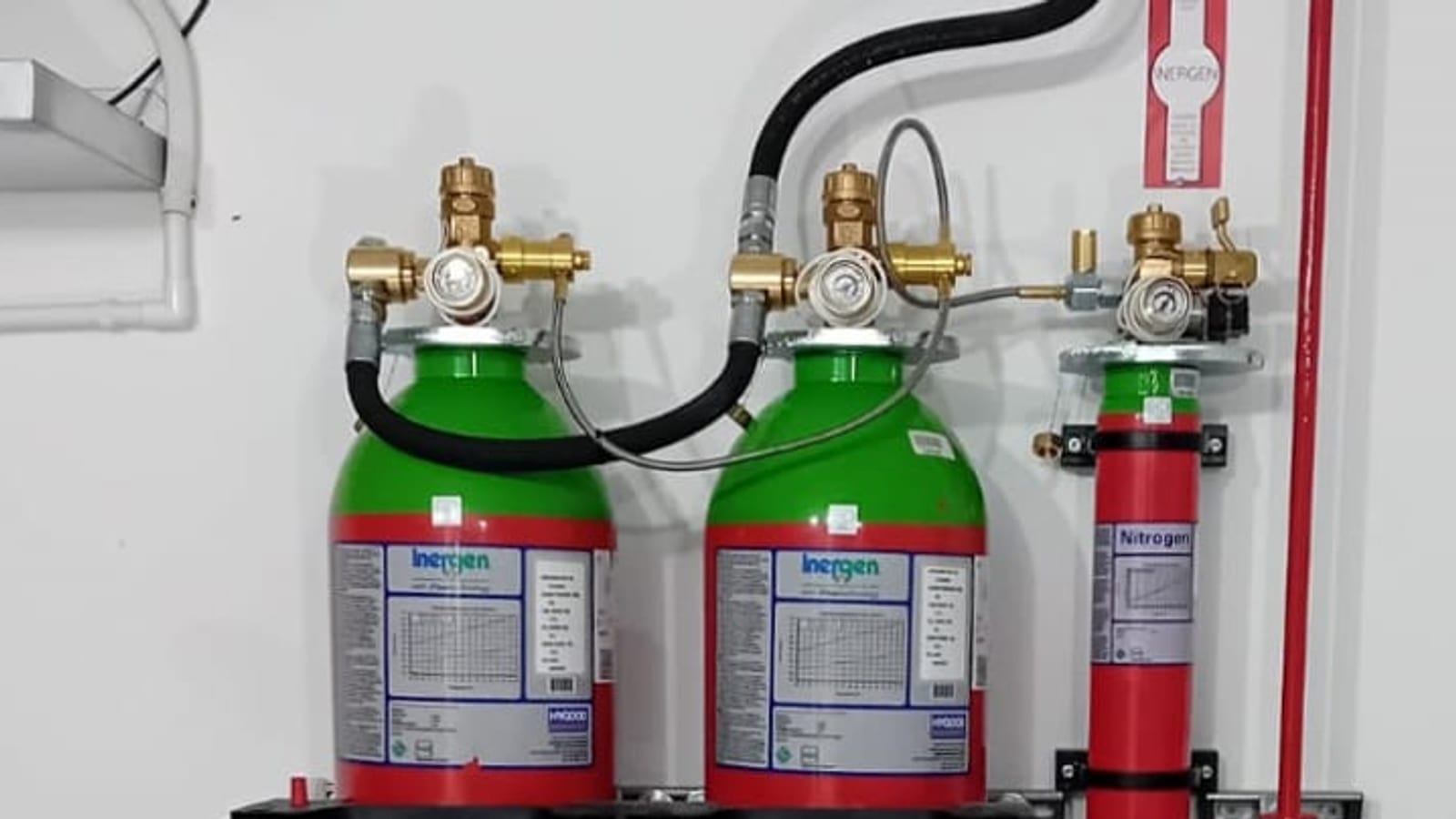
- Transformer cell and cable gallery gaseous system: cylinder weight–pressure record, discharge nozzle direction, room tightness; reference standard TS ISO 14520 series.
- Early warning: sampling tube detection for cable smoke appearing long before flame in cable gallery; planned and recorded per CEN/TS 54-14.
- Generator and fuel room: daily tank ventilation, suppression agent selection, intersection with panel alarm system.
If transformer pit drain and fire pump supply line are not read under the same inspection, one fault generates a second.
OSB, livestock facilities, and agro-based industry
In Elazığ Organized Industrial Zone: textile, foundry, plastic, construction materials, furniture, food, and logistics are adjacent. Elazığ Agriculture-Based Specialization (Livestock) Organized Industrial Zone places feed, biogas, and fertilizer facilities alongside livestock units:
- Feed and roughage storage: high stacking, rapidly spreading load, roof–stacking distance. Wet system controlled under TS EN 12845 framework; for similar scenarios warehouse and storage facilityA zone monitoring module connects an entire conventional detector line to the addressable loop. Critical areas are renewed with addressable devices while secondary zones continue to operate with their existing wiring. This provides significant cost advantage in capacity upgrade and renovation projects.
- Biogas and fermentation: methane accumulation, gas detection not to be confused with fire detection, flame arrester status.
- Dairy, flour, oil, and beverage facilities: boiler room and industrial kitchen hood; nozzle–tube inspection per NFPA 96 and NFPA 17A approach.
- Accommodation: guesthouses, dormitories, and city hotels with separate set focused on escape route — hotel and accommodationA zone monitoring module connects an entire conventional detector line to the addressable loop. Critical areas are renewed with addressable devices while secondary zones continue to operate with their existing wiring. This provides significant cost advantage in capacity upgrade and renovation projects.
- Portable equipment: YSC charging across the site, hydrostatic test schedule, and label traceability aligned with TS 11827.
Maintenance items emphasized by facility type
| Facility / section | Critical point | Inspected in maintenance | Basis |
|---|---|---|---|
| Ferrochrome smelting, ore preparation | Conveyor gallery, dust filter | Linear heat cable, spark suppression, foam line | CEN/TS 54-14, NFPA 25 |
| Transformer center, cable gallery | Oil-filled transformer, cable smoke | Cylinder weight, room tightness, sampling tube | wheeled devices must have |
| Cement and lime line | Dust units, electrostatic precipitator | Hood cleaning, hydrant pressure, pump test | TS EN 12845, NFPA 25 |
| Feed, roughage, logistics storage | High stacking | Roof–stacking distance, valve monitoring, flow alarm | wheeled devices must have |
| Food kitchen, boiler room | Hood, stack | Nozzle position, tube pressure, gas cutoff connection | NFPA 96, NFPA 17A |
We plan intervals not by regulation clause, but by the control schedule of the standard to which the system is subject; the principle is maintenance pricing page.
Fault line reality: after tremor, system may appear to be "working"
Elazığ lies on the East Anatolian Fault Zone. After a tremor, even if the panel shows green, sprinkler hangers may have loosened, flexible connections may be stressed, tube racks may have shifted, detector bases may have separated from ceiling. Therefore, alongside scheduled maintenance, we add post-event inspection heading: hanger–support observation, line tightness, tube position and pressure verification, panel event log.
From Ankara to Elazığ: our working method and what we do not promise
In Elazığ we did not mount a "regional office" sign on a rental office; we have no branch in the province, the team departs from Ankara Yenimahalle. Rather than hide this, we convert it into a plan:
- Planned regional tour: We consolidate facilities in Elazığ and surroundings within the same calendar window and descend into the field in a single dispatch; this allows maintenance day to be extended.
- Remote preliminary diagnosis in emergency fault: from panel error code, photograph, and maintenance history we narrow the problem remotely first — emergency repair serviceA zone monitoring module connects an entire conventional detector line to the addressable loop. Critical areas are renewed with addressable devices while secondary zones continue to operate with their existing wiring. This provides significant cost advantage in capacity upgrade and renovation projects.
- What we do not promise: We do not commit to "same-day site visit" for Elazığ. There are approximately 750 km between; a speed commitment that cannot be kept costs more than a kept maintenance schedule. Free site visit is available within Ankara; outside the province, the site visit is scheduled within the tour program.
- Single point of contact: from detection to gaseous suppression, systems can be consolidated in one contract; if requested, a facility can add CCTV maintenance to this.
Our tour schedule for other provinces nationwide service is on the page. In Elazığ, the most practical way to accelerate the meeting is this: send transformer and panel inventory — number of step-down centers, cell types, cable gallery length, quantity of gaseous system tubes if any. Once the list arrives, we determine scope without relying on estimation.
To Set Up Your Maintenance Program
One contract, a solution for everything: we provide end-to-end maintenance to fire detection, gas suppression, sprinkler, hydrant, and pump units in their entirety; if you wish, camera (CCTV) system maintenance can also be added to the same contract.
If you do not have the brand, age, and last maintenance record of the existing system on hand, that is not a problem; the first step is anyway inventory and current condition assessment. Setting up an annual program without seeing what is there in the field means selling maintenance for a system that does not exist.
You can examine your system brand's product equivalents in our product catalog ; for requirements specific to your facility's use class, you can visit our sectoral solutions pages.
For survey and quotation you can or send your plan through our write or directly You can call call the number. Survey is free within Ankara; for facilities throughout Turkey, the visit plan is established jointly before contract.
Frequently Asked Questions
Do you have a branch or permanent crew in Elazığ?
No. We do not have an office or regional management in Elazığ; the crew operates from Ankara Yenimahalle. We visit facilities in the province through planned regional tours consolidated within the same calendar window, and in case of emergency breakdown, we first narrow down the issue through remote preliminary diagnostics.
Do you perform site survey on the same day, and is there a survey fee?
We do not promise same-day survey for Elazığ; there is approximately 750 km between Ankara and Elazığ, and a speed commitment we cannot keep benefits no one. Survey is free within Ankara; outside the province, survey is tied to the planned tour program and the date is notified in advance.
Which detection is suitable for dusty environments such as ferrochrome smelting and ore preparation?
Point-type smoke detectors in these environments either produce false alarms or are disabled. Linear heat detection cable is preferred in conveyor galleries and cable ducts, and sampling tubed (aspiration) detection in enclosed spaces; spark detection and suppression on lines prior to bag filters are evaluated separately. In aspiration systems, filter contamination and tube hole blockage are measured at each maintenance visit.
What does gas system maintenance in transformer centers and cable galleries include?
Cylinder weighing and pressure recording, discharge nozzle direction and blockage inspection, room tightness, triggering line and panel connection; additionally, transformer pit drainage reading in conjunction with the fire pump supply line. TS ISO 14520 series serves as the baseline; CEN/TS 54-14 is taken on the early warning side.
On what basis is the maintenance interval determined, and is additional inspection required after an earthquake?
We tie the interval not to a general statement but to the control schedule of the standard applicable to the system: TS EN 12845 and NFPA 25 for wet systems, CEN/TS 54-14 for detection, TS ISO 14520 for gas systems, NFPA 96 and NFPA 17A for industrial kitchens, TS 11827 for portable devices. Because Elazığ is located on the East Anatolian Fault Zone, we add a post-event inspection section alongside scheduled maintenance; hangers-supports, flexible connections, cylinder rack position and detector bases are reviewed additionally.