
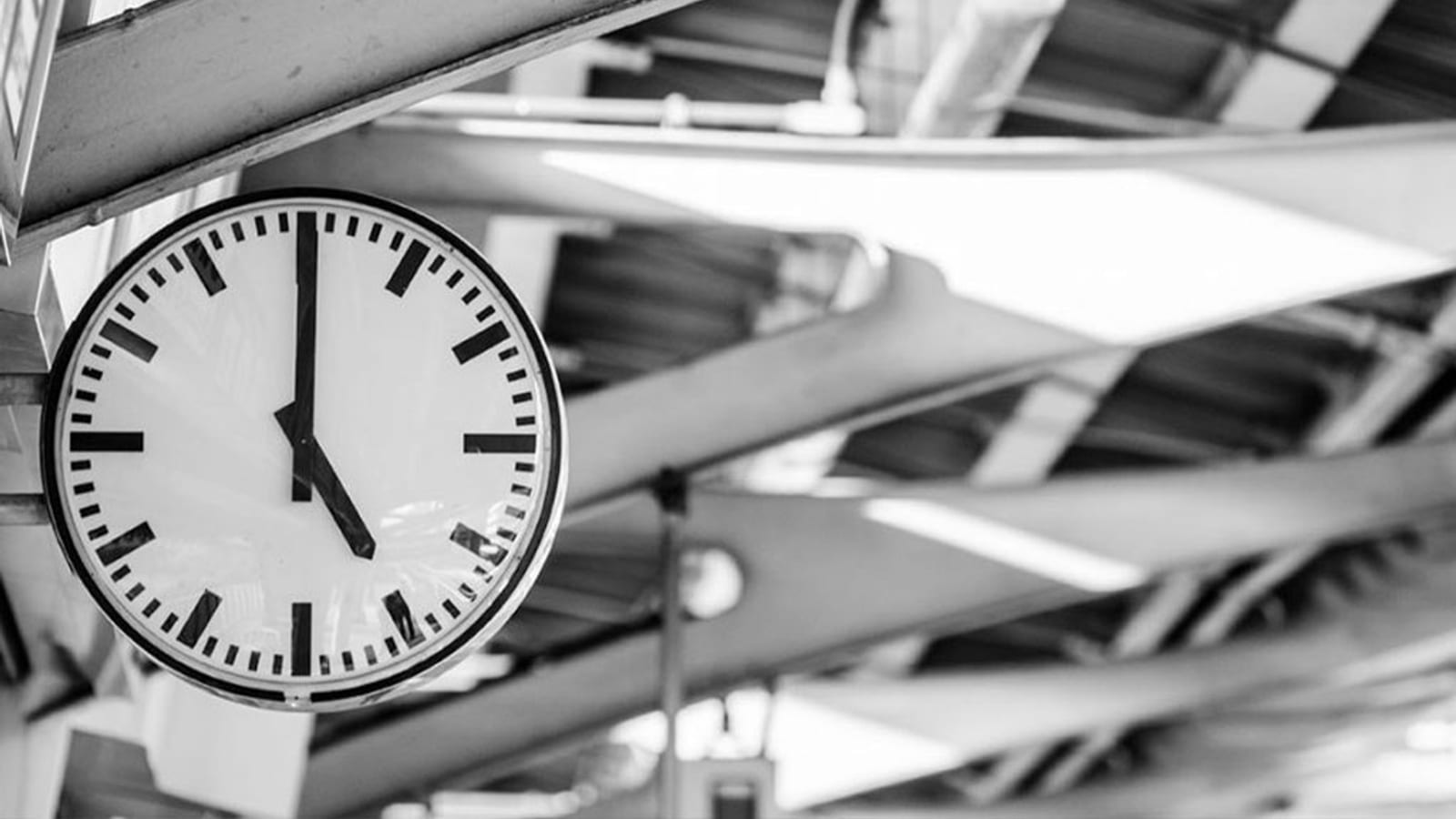
Why is a central clock system needed, and how is it installed?
A central clock system ensures that all clocks in the building are powered from a single source and display the same time. Clocks on the wall not matching each other is not merely a visual problem: in a hospital medication timing, in a school lesson bell, in manufacturing shift changes and security records, a time stamp is only meaningful with a common time source. The system consists of a master clock and subordinate clocks connected to it.


Selection guide and FAQ
Time source and distribution options
Where does the master clock get its time from and how is it transmitted to the subordinate clocks? The selection is made according to the building's infrastructure and the required accuracy.
| GPS master clock | NTP server (Stratum-1) | PoE subordinate clock | |
|---|---|---|---|
| Time source | Satellite signal | GPS + distribution over network | NTP server on network |
| Accuracy | Highest — directly from satellite | High | As provided by network |
| Wiring | Separate time line | Existing data network | Existing data network (single cable) |
| Antenna requirement | Yes — external facade/roof | Yes (on server side) | None |
| Suitable for | Time-critical facility, hospital | Institution with server room | Building with structured cabling infrastructure ready |
Determining points in design
- Antenna location — GPS master clock antenna must have clear sky view; antenna cable routing to the basement system room should be planned from the start.
- Secondary clock type — analog clock is easy to read and visible from distance; digital clock can display seconds and date, chronometer function is required in areas like operating rooms.
- Wired or PoE — if existing structured cabling is available, PoE secondary clock requires no additional line; otherwise running a separate clock line may be more economical.
- Daylight saving and power outage — transitions are performed automatically from master clock; clocks should return to correct time automatically upon power restoration.
- Common time with other systems — camera recording, card access, and fire panel event logs should use the same NTP source; this is critical for post-event investigation.
Understanding how an event develops requires placing records from different systems side by side: camera footage, door access log, fire panel event memory. If these systems run on different clocks, records will not match and sequence cannot be established. A common NTP source aligns these three records on the same time axis.
Frequently asked questions
Are secondary clocks adjusted individually?
No, that is the system's purpose. The master clock distributes time; daylight saving time transitions, correction after power outages, and clock drift are managed centrally. Individual clock adjustments are not necessary.
Is the wireless slave clock reliable?
It is used in existing buildings where cabling cannot be installed and represents a practical solution. In return, battery life monitoring and range planning are required; in time-critical areas, wired or PoE is preferred.
Can it be installed without an NTP server?
Yes, a GPS master clock can supply slave clocks on its own. An NTP server is required when the same time source is to be distributed to other devices on the computer network.
Can my existing clocks be used?
Existing clocks can be used if they have a communication interface compatible with the central system; independent battery-powered wall clocks cannot be connected to the central system. The type of existing devices is determined during the site survey.