
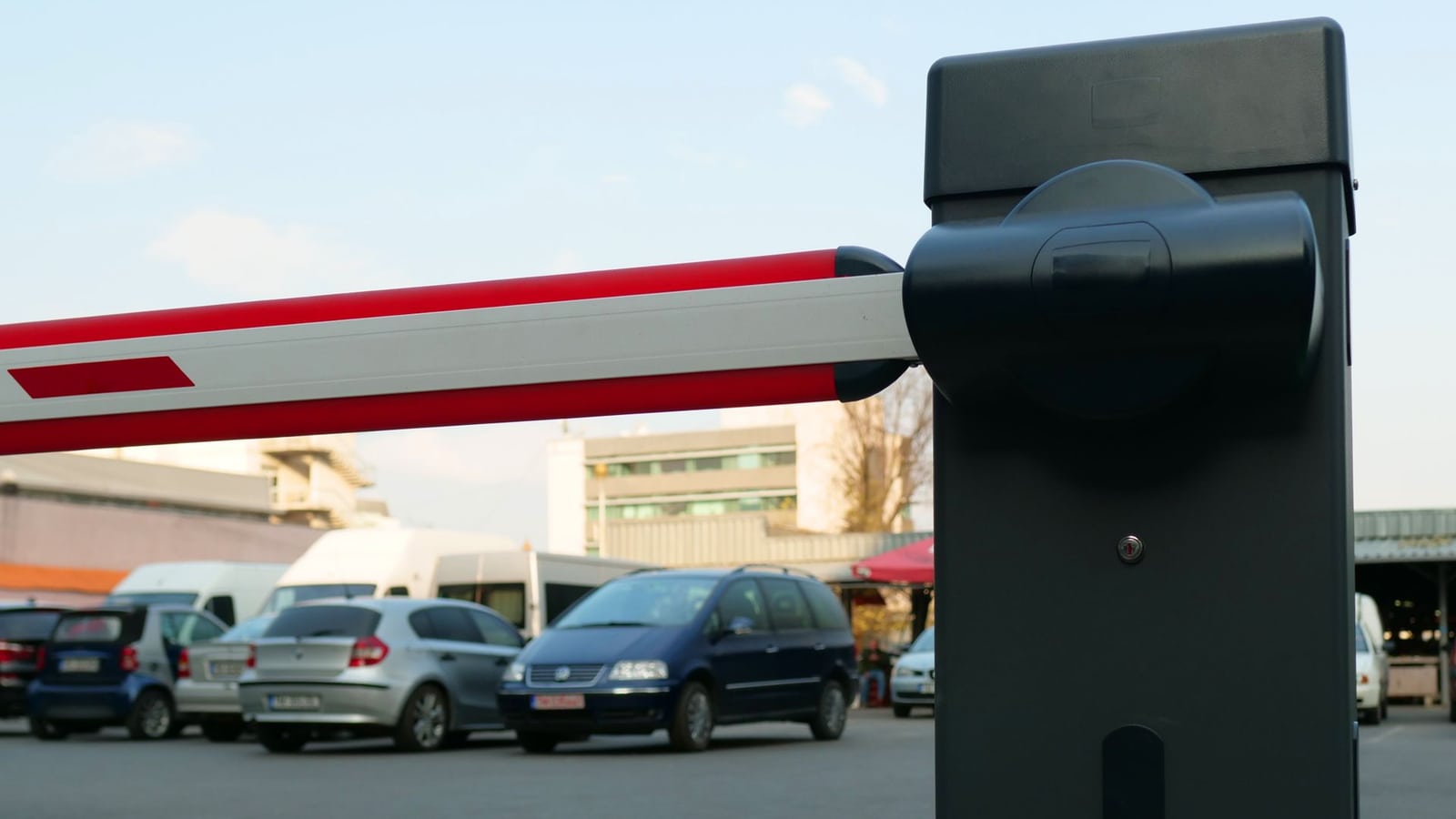
What is License Plate Recognition Access System (LPRAS) and how is it configured at sites?
The license plate recognition system reads the plate when a vehicle stops at the entrance, compares it with the authorized list in the database, and automatically opens the barrier if there is a match. No card, remote control, or operator is needed; the vehicle passes without stopping, and each passage is recorded with date, time, and plate number. As ASPEK, we most frequently install this at site and business center parking lot entrances.
License Plate Recognition Access Systems için ürün listesi hazırlanıyor
Bu sistemin projelendirmesini, kurulumunu ve bakımını yapıyoruz; ürün kataloğunu siteye yüklüyoruz. İhtiyacınızı iletin, uygun marka ve modelle birlikte teklifinizi hazırlayalım.
Selection guide and FAQ
How does passage occur?
- Vehicle is detected — A loop detector or radar beneath the road detects the vehicle approaching the barrier and triggers the camera.
- Plate is read — The ANPR camera captures the plate; the software reads the characters (OCR) and converts them to text. Nighttime headlight glare and darkness are overcome by the camera's own infrared illumination.
- Authorization is verified — The read plate is compared with the subscriber list. If registered, passage is opened; if unregistered, it falls into visitor flow, or if on the blacklist, it is not opened at all.
- Barrier opens and record is kept — The control unit provides dry contact to the barrier. After the vehicle passes, a second loop prevents the barrier from closing onto the vehicle. The passage is recorded with plate, date-time, and photograph.
Technical criteria determining correct plate reading
Success rate in plate recognition depends more on camera positioning than on camera brand. Values we measured during site surveys:
| Criterion | What should be | What happens if it is wrong |
|---|---|---|
| Horizontal angle (camera – plate) | Less than 30° | Characters appear slanted, reading rate decreases |
| Vertical angle (camera height) | Less than 30° | Plate appears compressed; error increases especially on SUV/pickup trucks |
| Plate height (in image) | Minimum 25–30 pixels | Characters do not separate, letters–numbers become mixed |
| Illumination | Camera's own IR illuminator | Night headlight glare burns out plate, daytime shadow obscures it |
| Vehicle speed (at reading point) | At barrier ~0–20 km/s | Blur during fast passage; separate high-speed camera required |
| Loop location | Must overlap with the area seen by the camera | Camera sees vehicle from angle without license plate, trigger fails |
Correct installation on-site — differences we observed in the field
- Subscriber plates are defined on a per-unit basis; adding a second vehicle to a unit or updating the plate upon tenant change should be simple enough for management to accomplish with a few clicks.
- A separate workflow is established for visitor vehicles: administrator/unit approval via intercom or temporary plate assignment. Otherwise, the attendant manually opens the barrier for each visitor, and the system loses its purpose.
- A blacklist is required for delinquent/unauthorized vehicles; however, this is a security measure, not a collection tool (see the KVKK note below).
- On most sites, the exit side is unrestricted with a single-direction loop; at paid parking facilities, however, reading is performed at exit as well to match entry-exit and calculate duration.
- The barrier must be linked to the fire alarm: upon alarm activation, barriers must automatically move to the open position, and evacuation and fire service entry must not be obstructed. ASPEK establishes this connection via the relay output of the fire detection panel.
- Manual opening of the barrier during power outage (key lock) and uninterruptible power supply are planned from the outset in the project.
Vehicle license plate is personal data under Law No. 6698 because it can be associated with an individual. Therefore: an information notice must be posted at the entry point; access to records must be documented in writing; records must be retained for a purpose-appropriate period (typically 30–60 days in site management) and then deleted. The Personal Data Protection Board found a single-stage parking lot query system unlawful when personal information could be accessed by entering only the license plate, and requested two-factor authentication (such as password via SMS/email) (Decision dated 01.06.2023, No. 2023/924). When setting up the system for site management, we explain this framework as well.
Frequently asked questions
Does license plate recognition system completely replace card-based access?
It largely replaces it for vehicle entry — the driver does not need to open the window or swipe a card. However, card-based/biometric systems continue to be necessary for pedestrian doors, elevators, and common area access. Both systems can be integrated in the same software.
Does it read dirty, tilted, or foreign license plates?
Dirty and slightly tilted plates are generally read; heavy soiling, broken plates, and non-standard fonts increase error rate. For foreign plates, the software must have the relevant country format defined. For these cases, a guest/manual opening procedure is always maintained as backup.
Does the system work without internet?
In local installation, the plate list and decision logic reside in the field control unit; passages continue even if internet is cut. Internet is required only for remote management, notifications, and backup.
Can it be added to our existing barrier?
In most cases, yes. If the barrier has a dry contact (open/close) input and loop detector connection, the existing barrier is preserved; camera, control unit, and software are added. During the site survey, the barrier brand and control card are checked.
What happens to the barriers in case of fire?
In a properly designed system, the relay output of the fire alarm panel is connected to the barrier control unit, and the barriers move to the open position upon alarm. We consider this connection as part of our standard practice to ensure evacuation routes and firefighter access are not obstructed.