
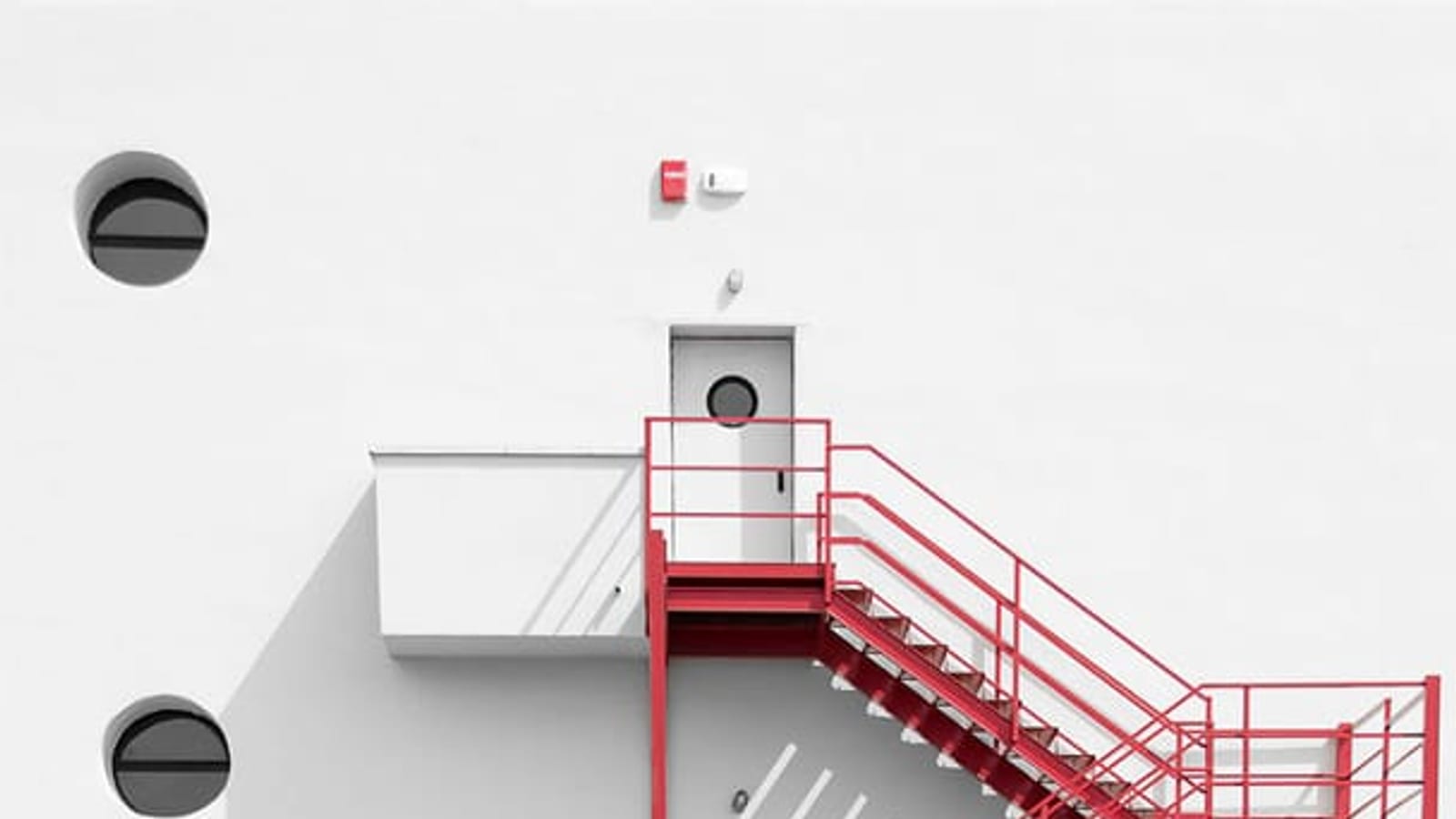
Maintaining fire safety systems in apartments and residential complexes in operational condition is, pursuant to regulations, the responsibility of the building owner and property manager. On this page, we explain from the manager's perspective which systems are mandatory, what maintenance covers, and how to establish an annual contract compatible with the budget contribution allocation.
ASPEK Mühendislik, based in Ankara Yenimahalle, has been providing fire detection, hydro-pressure tank and hydrant, sprinkler, emergency lighting, and fire extinguisher maintenance services to residential communities and apartment buildings for over 20 years under annual service contracts. This page answers the residential manager's question: "what should I have done, why, and under which regulations?"
Who is responsible for fire system maintenance — you as the manager?
Picture a residents' meeting: the elevator company's annual invoice is on the agenda, roof repairs are being voted on, the parking garage door motor is being discussed. Whether the corridor detector actually senses smoke, or how many years the fire cabinet hose has not been deployed, never comes up — until a fire department inspection notice or insurance correspondence arrives at the door.
The regulations are clear on this matter. The Regulation on Fire Protection of Buildings addresses periodic testing and maintenance through Article 84 on the suppression systems side, and Article 100 on the detection and alarm side building owner and property manager. — or places it on the building official to whom responsibility has been written over. The person bearing this burden on behalf of unit owners is the management; without a written contract and signed reports on file, the defense "the maintenance company was negligent" does not protect the manager.
The analogy is actually simple: no manager would operate an elevator without maintenance, because elevator maintenance has become routine over the years. Fire systems protect the same residents in the same building; their only difference is that unlike elevators, they do not show their faults every day. A neglected fire system is not discovered the night it is needed.
What systems does your building's height require?
Which system must be present in a residential building is not determined by the number of floors building structure height but by thresholds in the regulation. The thresholds of most concern to residential community managers are these:
| Building condition | Expected system |
|---|---|
| Building height exceeding 21.50 m in residential use | Fire detection and alarm system |
| Building height exceeding 51.50 m in residential use | Automatic sprinkler system (BYKHY Article 96) |
| Enclosed parking areas exceeding 600 m² in area | Automatic sprinkler system |
| Escape routes and common areas | Emergency lighting and signage |
| All buildings | Fire cabinet, hydrant and portable extinguishers as per design |
These thresholds are for installation; on the operational side, the rule is simpler: every system installed must be kept operational for as long as the building stands. A hydro-pressure tank installed ten years ago for occupancy permit but never tested since exists on paper, not on site.
Maintenance scope in residential communities and apartment buildings
Typical maintenance contract line items in a residential community are as follows; each is detailed on its own page:
- Fire detection and alarm — Detector tests according to the staged arrangement of TS CEN/TS 54-14, battery charge test, siren and scenario control
- Hydro-pressure tank and fire pump — Operation, pressure and activation tests within the framework of TS EN 12845 and NFPA 25; city mains pressure does not substitute for fire water supply
- Fire cabinets and hydrant line — hose deployment, valve and record checks, line pressure measurement
- Sprinkler and parking lot sprinklers — valve positions, flow switch test, lines exposed to freezing risk monitoring
- Emergency lighting and signage — functional test through interruption simulation and annual duration (autonomy) test
- Portable extinguishers — periodic maintenance and filling monitoring within the framework of TS 11827
The point to note is the interval: the regulation does not prescribe a single uniform frequency called "maintenance once a year"; it refers each system to its own standard and manufacturer documentation. In a good contract, intervals are written system by system, with reference to these sources — this is why the pump requires weekly operation while detector tests are spread over the year.
Annual service contract aligned with the building fund budget
Management's most real constraint is budget, and the solution is clear: fire system maintenance must enter the building fund budget as a single and predictable line item — just like the elevator contract. An unplanned emergency service call costs more and, when combined with pre-inspection rush, leaves management in a difficult position. An annual maintenance contract fixes the visit schedule, scope, and reporting format from the outset.
From the detection panel to technical rooms with gas suppression systems and parking lot sprinklers, consolidating all systems in the building under one contract leaves management with one point of contact and one file; some communities also add common area camera maintenance (CCTV) to the same visit.
What should be in your file for inspections and insurance correspondence?
- Signed periodic maintenance reports and visit dates
- Test records: battery charge test, pump operation, line pressure measurements
- Extinguisher maintenance-refill records and labels
- Identified deficiencies and correspondence confirming remediation
- A copy of the current maintenance contract in force
This is the first file requested in fire department inspections and common area insurance correspondence; failure to present maintenance records following a potential loss leaves the manager defenseless to both unit owners and insurers. For a broader perspective from the manager's viewpoint, you can read our fire safety guide for residential buildings and communities. okuyabilirsiniz.
Ask for the written quotation you will present to the board
For this matter to be decided at a meeting, you must have a line-by-line written text: an inventory of systems in the building, each system's maintenance interval, an annual visit plan and reporting format. Let us conduct an on-site survey and prepare this proposal — Site surveys within Ankara are free of charge. For communities outside Ankara, our planned regional tours and remote pre-diagnosis line are available. Call +90 312 385 15 66 or use our contact page to reach us.
To Set Up Your Maintenance Program
One contract, a solution for everything: we provide end-to-end maintenance to fire detection, gas suppression, sprinkler, hydrant, and pump units in their entirety; if you wish, maintenance of camera (CCTV) systems can also be added to the same contract.
If you do not have the brand, age, and last maintenance record of the existing system on hand, that is not a problem; the first step is anyway inventory and current condition assessment. Setting up an annual program without seeing what is there in the field means selling maintenance for a system that does not exist.
You can examine your system brand's product equivalents in our product catalog ; for requirements specific to your facility's use class, you can visit our sectoral solutions pages.
For a survey and quotation, write to us via our contact page or call +90 312 385 15 66 directly. Survey is free within Ankara; for facilities throughout Turkey, the visit plan is established jointly before contract.
Frequently Asked Questions
Who is responsible for fire systems maintenance in apartment buildings — the manager or the unit owners?
The Regulation on Fire Protection of Buildings, under Article 84 on suppression systems and Article 100 on detection and alarm systems, places the responsibility for periodic testing and maintenance on the building owner and manager; responsibility transfers to the building authority only by written delegation. Unit owners' association is de facto managed by the management company. A written maintenance contract and signed periodic reports are evidence that the manager is fulfilling this duty.
At how many stories is sprinkler systems mandatory?
The measurement is building height, not story count. According to BYKHY Article 96, automatic sprinkler systems are required in residential buildings exceeding 51.50 m in height; fire detection and alarm systems are required in residential buildings exceeding 21.50 m in height. Additionally, enclosed parking areas larger than 600 m² require sprinkler systems regardless of building height. Your building's specific requirements are determined from project documents and on-site survey.
How frequently should maintenance be performed?
The regulation does not prescribe a single interval; it delegates each system to its own standard and manufacturer documentation. On the detection side, TS CEN/TS 54-14 controls establish a hierarchy spanning daily, monthly, and annual periods: daily visual inspection at the base and comprehensive testing at the top covering the year. For pumps and water systems, intervals range from TS EN 12845 to NFPA 25 weekly operation through annual tests; extinguishing agents are monitored under TS 11827. A proper contract specifies intervals system by system with reference to these sources.
What documents are required for fire department inspection and insurance?
Signed periodic maintenance reports, test records (battery load tests, pump operation, line pressure measurements), extinguishing agent maintenance and refill records, correspondence regarding identified deficiencies and their remediation, and a copy of the current maintenance contract should be kept together in one file. This file is the first item requested in inspections and building common area insurance correspondence; inability to present maintenance records during post-loss expert assessment puts management in a difficult position.
Binamızdaki adresli algılama sisteminin markasının yetkili servisi misiniz?
No — we do not claim to be the authorized service for any brand. We procure these panels' products and undertake their maintenance and repair with our own team. We have parts inventory and technical knowledge for most addressed and conventional panels commonly used in residential communities. For equipment under warranty, manufacturer terms are preserved; we clarify with management which interventions fall within warranty limits before commencing work.
Our community is outside Ankara; how do we obtain service?
Our headquarters is in Ankara Yenimahalle; we do not have branch offices by province. Residential communities throughout Turkey are visited via planned regional tours; between visits, breakdown calls are handled with remote preliminary diagnosis and necessary intervention is scheduled for the next tour or a separate visit. Site surveys within Ankara are free of charge; in both cases we prepare a written proposal that management can submit to the board.