
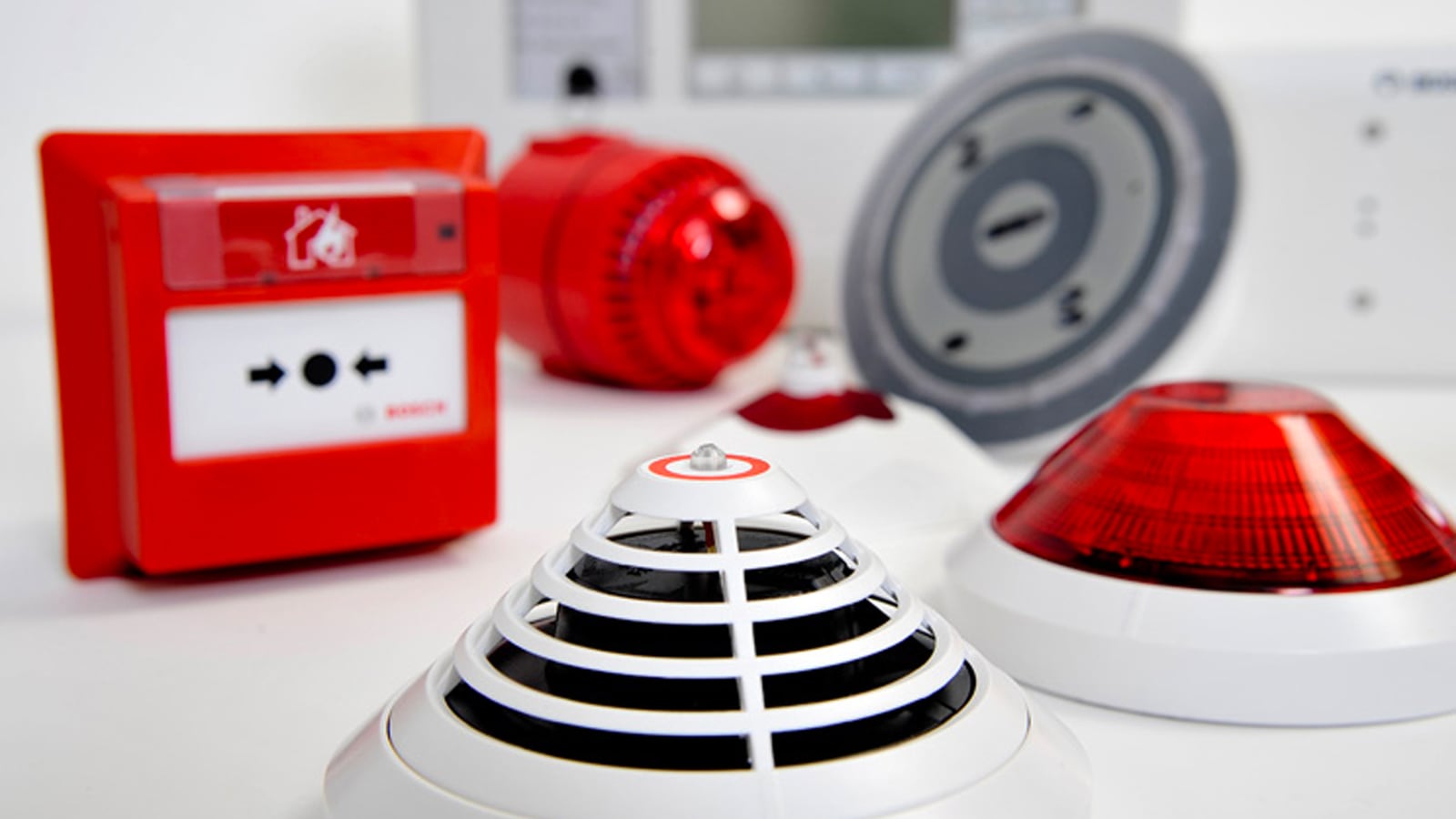
Fire detection systems are life safety systems that detect a fire at the earliest possible stage without requiring human intervention, alert the occupants in the building, and trigger automatic actions. In Turkey Regulation on Fire Protection of Buildings (BYKHY) it is mandatory for many building types; product components TS EN 54 must comply with the standard series.
As ASPEK Engineering, we operate based in Ankara. We execute the complete scope of survey, project design, equipment procurement, installation, commissioning, acceptance testing, and periodic maintenance processes on a single-source basis.
Other pages in this silo: kitchen hood suppressionhistoric buildings panel suppression (aerosol · Novec 1230 · FM-200) and aerosol suppressionA zone monitoring module connects an entire conventional detector line to the addressable loop. Critical areas are renewed with addressable devices while secondary zones continue to operate with their existing wiring. This provides significant cost advantage in capacity upgrade and renovation projects.
What is a Fire Detection System and What Components Does It Comprise?
A fire detection and alarm system (FDAS) consists of five layers:
- Detection layer — Smoke, heat, flame, or gas detectors
- Manual alert layer — Fire alarm call points (EN 54-11)
- Control layer — Fire alarm panel (EN 54-2) and power supply (EN 54-4)
- Alert layer — Siren (EN 54-3), strobe light (EN 54-23), voice alarm (EN 54-16)
- Action layer — Damper, fan, elevator, magnetic door holder, suppression trigger, BMS signal
The value of the system derives not so much from the correct selection of these layers but from their correct matching . A correct detector placed in the wrong environment produces false alarms; a system that generates false alarms is eventually disabled. A disabled system is equivalent to no system at all.
Two Fundamental System Architectures: Addressable and Conventional
The most common conceptual error in the sector is mistaking the "addressable / conventional" distinction for a detector type distinction. This distinction is a communication architecture distinction: it determines how the device communicates to the panel , not how it detects fire.
For this reason, a beam detector, a flame detector, or a linear heat detection cable can operate in both conventional and addressable systems . The device itself does not change; only the connection layer changes.
| Criterion | Conventional | Addressable |
|---|---|---|
| Resolution | Zone — "Zone 3 in alarm" | Device — "Loop 1 / Address 47 / Boiler Room" |
| Wiring | Each zone separate line + separate siren line | Hundreds of devices on a single loop |
| Line break | Entire zone goes offline | No device is lost with Class A + isolator |
| Contamination monitoring | None | Yes (in percentage) — predictive maintenance |
| False alarm immunity | Low | High — alarm verification, day/night profile, pre-alarm |
| Scenario (cause & effect) | Highly restricted | Fully flexible |
| Initial investment | Low | High |
| Scalability | Limited | High |
For details on both architectures:
- Addressable Fire Detection Systems
- Conventional Fire Detection Systems
- Fiber Optic Temperature Sensing (DTS)
Detector Types by Detection Principle
All of the detectors below can be used in both architectures described above.
Point-Type Detectors
- Smoke detectors (EN 54-7) — optical/photoelectric, ionization, dual optical, laser
- Heat detectors (EN 54-5) — fixed temperature, rate of rise (RoR), combined; temperature classes A1 through G
- Multi-sensor detectors — Smoke+Heat (EN 54-29), CO+Heat (EN 54-30), Smoke+CO+Heat (EN 54-31)
Line (Linear) Type Detectors
- Beam detectors (EN 54-12) — end-to-end or reflective; with manual or motorized automatic alignment. For high-ceiling warehouses, atriums, and hangars.
- Linear heat detection cable (LHD) — digital/non-reversible (EN 54-28), analog/reversible (EN 54-22), fiber optic DTS, pneumatic tube. For cable runs, conveyors, parking garages, and tunnels.
Flame Detectors
Flame detectors (EN 54-10) sense the radiant energy and vibration frequency emitted by a flame; they do not wait for smoke or heat to reach the detector. Response time is in the range of milliseconds to seconds.
- UV — fastest; sees hydrogen and alcohol flames
- IR — sees through smoke; cannot see hydrogen
- UV/IR — high false alarm immunity
- Triple IR (IR3) — highest immunity, range above 60 m
- IR3-H2 / Multi-IR — hydrogen, methanol, ammonia flames
Air Sampling Detection
- Aspirating smoke detector (ASD) (EN 54-20) — Class A (very high sensitivity), Class B (enhanced), Class C (normal). For data centers, clean rooms, cold storage.
- Duct-type detector (EN 54-27) — prevents smoke spread through ventilation ducts.
Industrial Specialized Detection
- Spark detectors — dust collection lines, conveyors, wood/paper/textile facilities. Intervenes before fire starts.
- Gas detection systems — combustible gas, CO, hydrogen. Outside the scope of EN 54, subject to separate standards.
Fire Alarm Panels
The fire alarm panel is the system's brain and must comply with EN 54-2 and EN 54-4. The panel type directly determines the system architecture:
- Adresli adresli algılama sistemi
- Konvansiyonel adresli algılama sistemi
- Suppression control panel
- Modules and short-circuit isolators
Alert and Evacuation Layer
Detection alone is insufficient; the alarm must be announced correctly. Siren sound level must be at least 5 dBA above ambient noise and minimum 65 dBA; in sleeping areas, 75 dBA must be provided at the bedside. Visual alert devices (strobes) shall be selected according to EN 54-23 in category C (ceiling), W (wall), or O (open area) with calculated coverage volume.
EN 54 Standards and BYKHY Requirements
Fire detection system components must comply with the EN 54 series, which is a harmonized standard under the European Union Construction Products Regulation (CPR 305/2011). In Turkey, these standards are in force as TS EN 54.
Critical warning: The statement "EN 54 compliant" is insufficient. Three documents must be requested:
- Issued by a Notified Body EN 54-X certificate
- Manufacturer's Declaration of Performance (DoP)
- Physically present on the product CE marking + notified body number
Which System for Which Building?
| Building / Environment | Recommended Primary Detection |
|---|---|
| Office, hotel, hospital, school | Addressable — optical smoke or multi-sensor |
| Enclosed parking garage and EV charging area | Linear heat detection cable (LHD) + optical smoke |
| High-ceiling warehouse (>10 m) | Beam detector or aspirating system |
| Data center, clean room | Aspirating (ASD) Class A |
| Tunnel, cable gallery | Fiber optic heat detection (DTS) |
| Refinery, petrochemical, hydrogen facility | Ex-proof flame detector (IR3 / UV-IR) + gas detection |
| Factory, industrial facility | Flame + LHD + spark detector |
| Historic building, museum | Aspirating (concealed piping) or wireless addressable |
All sectoral solutions: Solution Areas
Brands We Work With
We produce brand-independent solutions according to project requirements, existing system, and budget. In addressable systems, since protocols are incompatible between brands, if adding to an existing system, brand selection is not an option but a necessity.
ASPEK Fire Detection Services
- Project and design — survey, risk analysis, detector placement, calculations, implementation project
- Installation and commissioning — wiring, addressing, cause & effect programming, acceptance testing
- Periodic maintenance — detector testing, contamination measurement, battery check, reporting
- System revision — conversion of conventional system to addressable, capacity upgrade
Frequently Asked Questions
What is the difference between addressable and conventional fire detection systems?
The difference is not in the detector type, but in how it is connected to the panel. In a conventional system, the panel only knows which zone is in alarm; in an addressable system, each device has a unique address and the panel shows exactly which device the alarm is coming from.
Can beam and flame detectors be both addressable and conventional?
Yes. Most of these devices are conventional from the factory (relay or 4-20 mA output) and are included in an addressable system via a monitoring module. Some models are natively addressable; they contain a protocol chip and are powered directly from the loop.
In which buildings is an addressable fire detection system mandatory?
According to BYKHY, addressable systems are mandatory in high-rise buildings. Additionally, addressable systems should be preferred in structures where the number of devices exceeds 50 or where knowing the fire location within seconds is critical.
How frequently should a fire detection system be maintained?
Regular periodic maintenance is required for detector function tests, contamination measurements, battery capacity checks and panel tests. Maintenance records serve as documentation for both regulatory and insurance purposes.
Can a heat detector be used in place of a smoke detector?
No. A heat detector will detect fire later than a smoke detector in all conditions. It is only preferred in environments where a smoke detector cannot operate (dust, steam, exhaust, kitchen).