
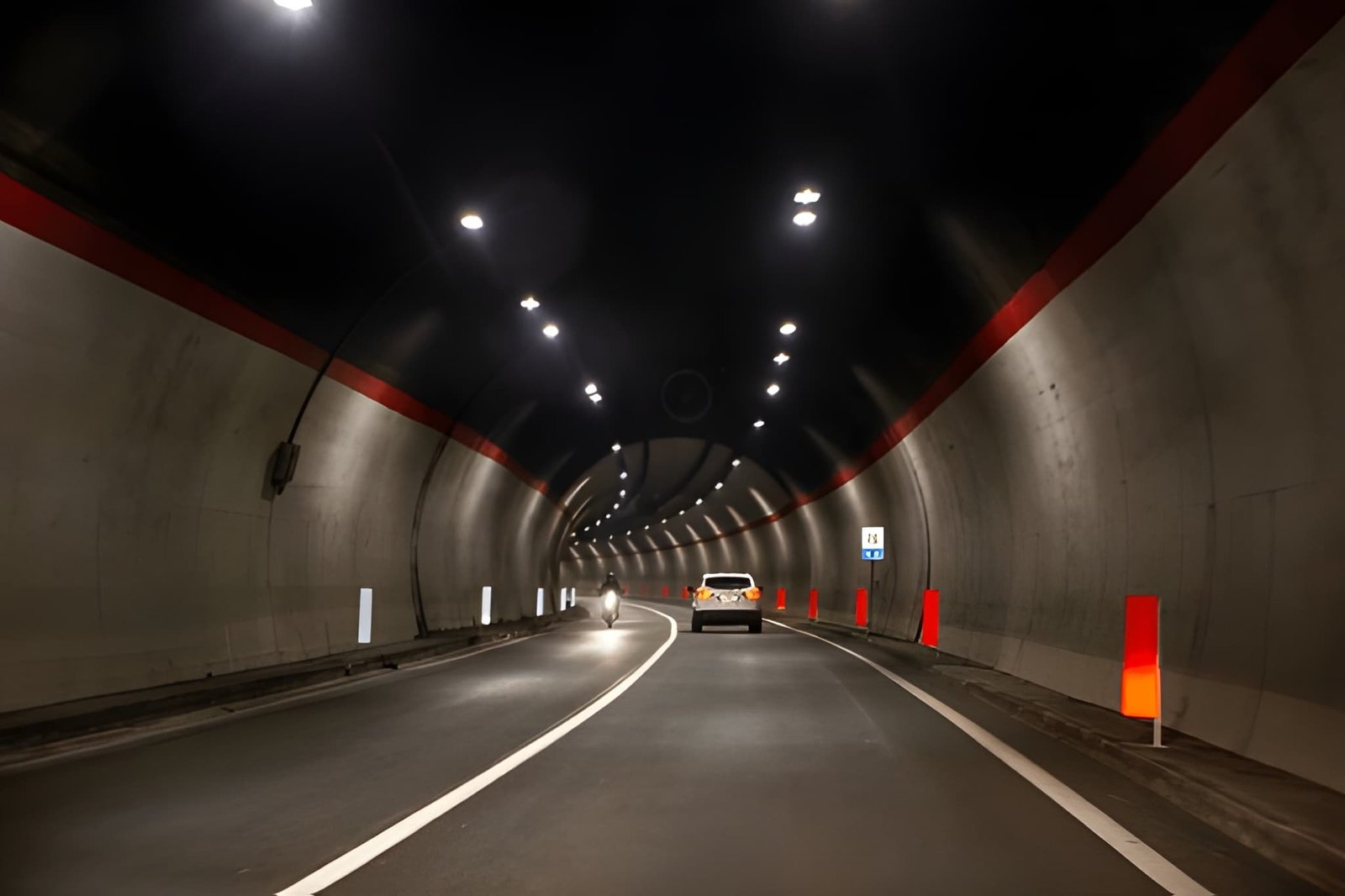
Fiber optic distributed temperature sensing (DTS) the cable itself is the sensor. There are no point detectors on the line; a single fiber, over kilometers, acts like a virtual temperature sensor at every meter . It does not tell that there is a fire, but at which meter it is located.
What is Fiber Optic DTS?
DTS (Distributed Temperature Sensing), a measurement method that transforms a fiber optic cable along its entire length into a temperature sensor. In classical line-type detection, the cable operates like a single long detector that responds when a specific temperature is reached. In DTS, however, the line is converted into thousands of independent measurement pointsturns into it.
The result in practice is as follows: the panel does not say "there is heat in zone 3"; "at the 2,417th meter of the line, the temperature is 71 °C and increasing by 9 °C per minute" it says.
Operating Principle: Raman Backscattering
The DTS unit sends short laser pulses into the fiber. As light travels through the glass, part of it is scattered back; in this scattered light, Raman components are present:
- Stokes component — barely affected by temperature, serves as a reference.
- Anti-Stokes component — its intensity varies with temperature.
The unit measures the ratio between these two to calculate the temperature at that point. Because the ratio is used, cable contamination, aging, or losses at splice points do not distort the measurement — this is why the system remains stable in field conditions for years.
Position information comes from time of flight : the longer the pulse takes to travel and return, the more we know at which meter the scattering occurs (OTDR principle). Typically at ~1 meter resolution, 8–10 km of line per channel is monitored from a single unit.
Why Fiber? The Advantages of an Unpowered Sensor
| Feature | Field significance |
|---|---|
| No electricity in cable | Produces no sparks → used in hazardous areas (Ex zones, LNG, paint booth) without worrying about barriers/Ex-certified equipment |
| Unaffected by electromagnetic interference | Measurement is not distorted next to transformer substations, high-voltage galleries, generators, and frequency converters |
| No metallic components | Safe in corrosive environments and areas with high ground potential differences |
| Long distance | No intermediate power supplies, intermediate panels, or repeaters needed for kilometers of line |
| Zones are defined in software | When usage changes, the cable is untouched; zone boundaries and alarm thresholds are updated from software |
Alarm Criteria
In DTS, alarm is not limited to a single threshold; it can be defined separately for each zone:
- Fixed temperature — Alarm when a specified absolute value is exceeded (e.g., 68 °C).
- Rate of Rise (RoR) — Alarm if temperature rises faster than a specified rate per minute. Detects fire long before reaching the absolute threshold.
- Differential — A point deviating significantly from the average of its neighbors. Filters out seasonal and daily temperature variations; this criterion prevents false alarms in summer heat.
One section of the same line can be defined as "transformer — 80 °C fixed threshold", another section as "conveyor — 5 °C per minute rise". Conventional or addressable line-type detection does not have this flexibility.
Where Is It Used?
| Location | Why DTS |
|---|---|
| Tunnel | Jet fan direction and evacuation direction depend on at which meter the fire is located |
| Cable gallery, cable duct | Kilometers of difficult-to-access line; fire starts here and darkens the entire facility |
| Transformer substation, high-voltage field | Electromagnetic interference and potential difference; moreover, overheated connection points are detected before fire |
| Conveyor belt, coal storage yard | Long line, dusty environment, and risk of self-heating and smoldering |
| Petrochemicals, LNG, pipelines, tank farm | Ex zone; no electricity in the cable eliminates certification burden |
| Very large enclosed parking garage | Meter-based location on long lines with a single unit |
Difference Between DTS and Classical Linear Heat Detection (LHD)
| Fiber optic DTS | Analog LHD (EN 54-22) | Digital LHD (EN 54-28) | |
|---|---|---|---|
| Position information | Meter-based | Zone/line-based | None — line in alarm |
| Temperature reading | Continuous, along entire line | Limited | None (triggers when threshold reached) |
| After alarm | Cable usability | Usable | Triggered section replaced |
| Typical line length | 8–10 km / channel | Several hundred meters | Several hundred meters |
| Electricity / EMI | No electricity in cable | Powered | Powered |
| Initial investment | High (unit) | Medium | Low |
| Location | Kilometers of line, Ex, location critical | Medium-length line | Parking garage, short line |
The question that determines the choice is: does knowing the fire location with meter-level precision change your scenario? If it does (jet fan direction, zonal suppression, long evacuation route), DTS's cost is justified. If it does not — as in a small parking garage — classical LHD is the correct and economical solution.
Limitations — Where Does It Fall Short?
- Does not detect smoke. Measures heat. If fire must be detected at the smoke stage, aspiration (ASD) or point-type smoke detection is configured together with it.
- Unit cost is high. On short lines, cost per meter cannot be justified; DTS becomes economical on long lines.
- Installation and commissioning require expertise. If the physical cable route does not exactly match the meter map in software, the system will display the fire location incorrectly — this is more dangerous than displaying it not at all.
- Fiber breakage splits the line. In critical facilities, the sensor cable is connected from both ends (loop); thus, even if a break occurs, the line continues to be read from both sides.
Design and Commissioning
- Route map — Each meter of the cable is matched with the facility's physical location and verified in the field after calibration.
- Zone definition — The line is divided in software according to fire compartments and scenario requirements; each zone is given its own alarm criterion.
- Integration — The DTS unit transmits the alarm to the fire panel and SCADA/BMS along with position information. The scenario (jet fan, zonal suppression, announcement) is configured based on this location.
- Verification test — During commissioning, controlled heat is applied at known points on the line; the meter reported by the system is compared with the actual location.
Frequently Asked Questions
What is fiber optic fire detection?
It is a heat detection method in which the fiber optic cable itself is used as the sensor (DTS — distributed temperature detection). There are no separate detectors on the line; a single fiber measures temperature every meter over kilometers and reports at which meter the fire is located.
Can DTS really pinpoint the fire location with meter-level accuracy?
Yes. Location is calculated from the round-trip time of the laser pulse (OTDR principle) and typically achieves ~1 meter resolution. However, this accuracy depends on the physical route of the cable in the building being correctly matched to the meter map in the software during commissioning.
Can existing communication fiber in the building be used for DTS?
No, the system operates with a dedicated sensor fiber; the cable type, sheath, and route are specially selected for measurement. However, unused (dark) strands within the same sheath may be evaluated if the cable is of a type suitable for DTS — this is a project-specific determination.
According to which standard is DTS certified?
Fiber optic heat detection systems are evaluated under EN 54-22 as returnable line-type heat detectors. After an alarm, the cable is not replaced; the system is reset and continues to operate — non-returnable digital LHD falls under EN 54-28.
Is DTS expensive?
The unit cost is high, while sensor cable is relatively inexpensive. For this reason, it is not economical on short lines; as the line lengthens, per-meter cost drops rapidly and becomes cheaper than conventional solutions on kilometer-length lines. The decision is made based on line length and the value of location information in the scenario.