
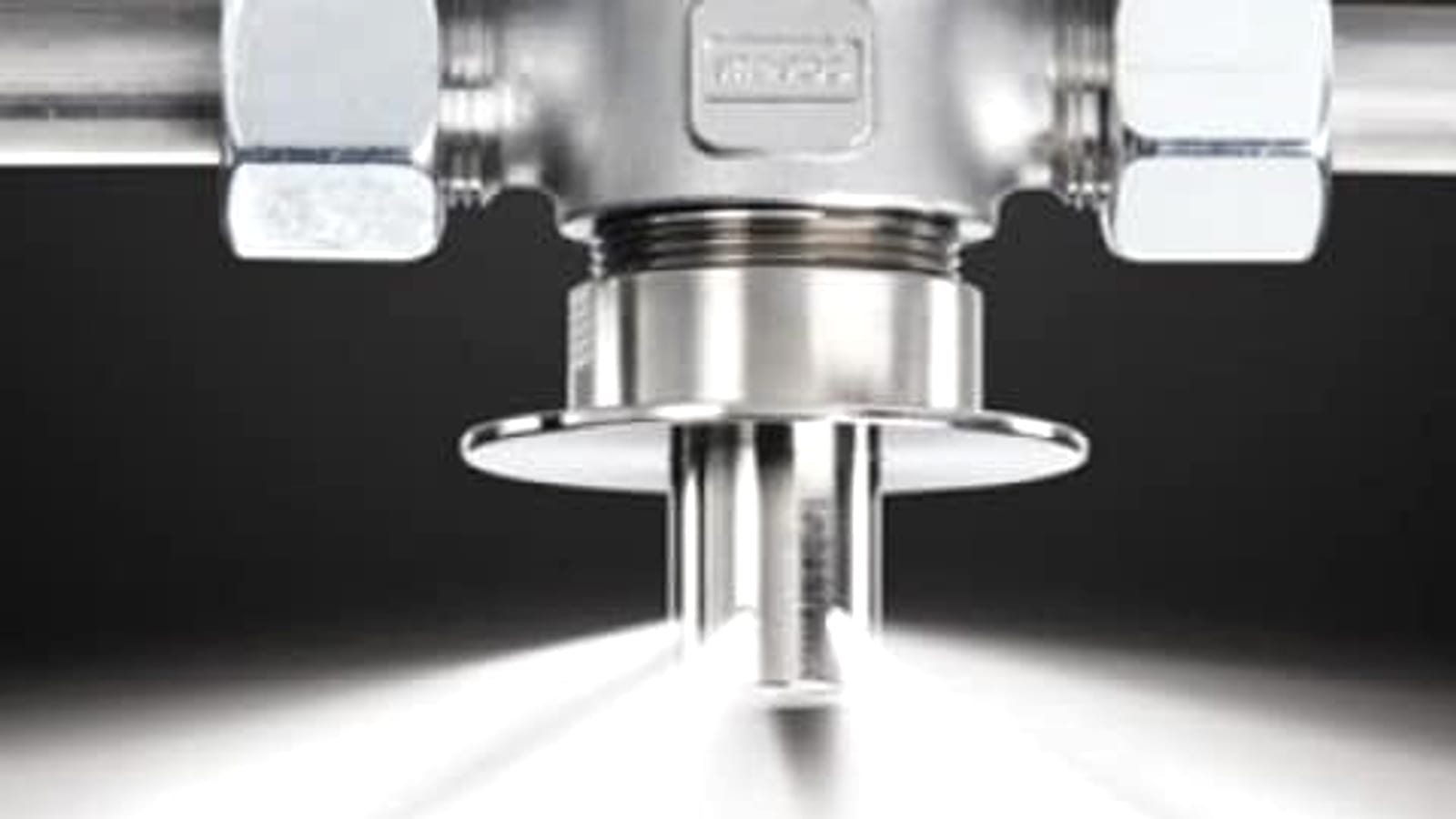
Water mist extinguishes the same fire with significantly less water compared to sprinklers. The reason is not magic surface area: when water is divided into droplets at the micron scale within the same volume, the heat absorption surface increases many times over; the droplets evaporate in the flame zone, both absorbing heat and locally diluting oxygen. The cost, however, is tight design tolerances — these systems are installed with tested and approved configurations, not with arbitrary calculations.
How it extinguishes
The extinguishing effect of water mist originates from the combined action of three mechanisms:
- Heat absorption. Small droplets evaporate rapidly in the flame zone; because the latent heat of vaporization of water is high, the flame temperature drops quickly.
- Local oxygen dilution. Evaporating water expands to hundreds of times its original volume and reduces the oxygen concentration in the combustion zone. This effect occurs not throughout the space but around the flame — therefore it does not create a suffocation risk for occupants of the type found in gaseous systems.
- Suppression of radiant heat. The mist curtain slows flame spread by reducing the flame's ability to heat surrounding combustible materials.
Pressure classes
| Class | Characteristic | 1–2 zones |
|---|---|---|
| Low pressure | Closer to sprinkler infrastructure; relatively large droplet size | Hotel room, residential, office, some storage applications |
| Medium pressure | Intermediate solution | Commercial spaces, confined volumes |
| High pressure | Very fine droplet, low water consumption; requires stainless steel piping and dedicated pump unit | Engine room, turbine, tunnel, archive, museum, vessel, data center |
High-pressure systems deliver maximum effect with minimal water, but must be evaluated together with piping, connection, and pump unit cost. Pipe diameters are small; this is a significant advantage in renovation projects and historic structures.
Where preferred
- Engine room, generator, and turbine. In oil fires, it cools hot surfaces and reduces re-ignition; excels in volumes where gaseous systems cannot meet sealing requirements.
- Historic structure, museum, archive, library. Water damage must be limited; fine piping and minimal water quantity are decisive.
- Hotel room and residential. Ability to reduce water tank volume simplifies the project.
- Industrial kitchen and cooking lines. Cooling effect is decisive in oil fires.
- Tunnel and enclosed parking garage. Suppresses radiant heat to slow spread and gains evacuation time.
- Vessel and marine craft. Commonly used due to limited water supply and weight restrictions.
Comparison with gaseous system
| Topic | Water mist | Clean gaseous system |
|---|---|---|
| Sealing requirement | Not required | Space sealing is essential; leak testing is performed |
| Occupied space | Suitable | Design concentration and gas type dependent |
| After discharge | Water discharge and drying required | Ventilation required, leaves no residue |
| Reusability | Operates again when water source is available | Cylinder refilling required |
| Cooling effect | Strong; reduces re-ignition | Limited; re-ignition risk if hot surface remains |
| Design flexibility | Dependent on approved configuration | Flexible through volume and concentration calculation |
What approved design means
The most common mistake in water mist systems is nozzle placement based on sprinkler logic. These systems within the framework of NFPA 750 and EN 14972 are installed with the specific configuration that the manufacturer has subjected to actual fire testing for a given hazard class. The approval scope jointly defines: nozzle type, operating pressure, spacing between nozzles and distance from wall, maximum installation height, type of hazard protected, and discharge duration.
When any one of these is changed, the system falls outside the approval scope. The practical consequence is: when evaluating proposals, what must be compared is not nozzle quantity or pipe diameter, but according to which test protocol it was approved and whether that approval covers your premises.
Water quality and filtration
Nozzle orifices are in the micron range. This generates the most frequently encountered problem in water mist systems: clogging. Precautions are taken at the design stage:
- An appropriate filtration stage for the system is installed and filter maintenance intervals are defined.
- Piping and connection materials are selected to avoid corrosion generation; stainless steel use is standard in high-pressure systems.
- The hardness and sediment load of the water source are evaluated; if necessary, a separate and conditioned water tank is used.
- Line flushing is performed upon commissioning — assembly debris is the system's first enemy.
Maintenance
In periodic maintenance, the pump unit and pressure source are operated and tested, filters are inspected and replaced, nozzle sampling is performed to check for clogging, zone valves and detection-to-trigger chains are tested, water source and tank level are verified. In high-pressure systems, additionally the pressure resistance of hoses and connection elements is reviewed.
For an introductory explanation of the topic, see our water mist systems article, for comparison of fixed water systems, sprinkler systems you can visit our page.
Project and proposal
For evaluation of water mist suitability for your premises, verification of approval scope, and preparation of comparative proposals, you can write to us or you can reach us at 0312 385 15 66.
Frequently Asked Questions
How does a water mist system work?
It sprays water divided into droplets at micron scale. The droplets rapidly evaporate in the flame zone, extracting heat; as they evaporate, they expand and locally dilute oxygen in the combustion zone, and the mist curtain blocks radiant heat, slowing propagation. These three effects combined provide suppression with significantly less water than sprinklers.
Should water mist or gaseous suppression be preferred?
If sealing of the space can be achieved, the volume is closed, and residue-free suppression is required, gaseous systems are suitable. If sealing cannot be achieved, if personnel are continuously present in the space, or if strong cooling is required due to hot surfaces, water mist is preferable. The decision is made by evaluating the space's sealing capability and fire type together.
How much water does a water mist system use?
It uses significantly less water compared to sprinkler systems; this reduces water tank volume and limits water damage after suppression. The exact amount depends on the system's approved configuration, hazard class, and discharge time, and is determined by project calculation.
Can nozzle placement in a water mist system be done freely?
No. These systems are installed within the NFPA 750 and EN 14972 framework using the approved configuration that the manufacturer has subjected to real fire testing. Nozzle type, operating pressure, nozzle spacing and distance to wall, maximum installation height, and protected hazard type are defined together; if any one is changed, the system falls outside approval scope.
Do water mist nozzles clog?
Since nozzle orifices are at micron scale, sediment and scale risk are real. Preventive measures are taken during the design phase: appropriate filtration, corrosion-resistant pipe material, assessment of water source hardness and sediment content, and line flushing during commissioning. Periodic maintenance includes filter replacement and nozzle sampling.